my chronic pain told me what the doctors never could

For more than 14 years, I’ve been looking for mental health support.
I’ve spent years on waiting lists, completed assessments that found I wasn’t quite unwell enough for treatment, and felt my trust in the system fizzle out to almost nothing.
One GP told me a sexless marriage was perfectly normal and not worth discussing. Another allowed me to come off antidepressants without proper support, triggering severe withdrawal symptoms and the return of suicidal thoughts. The list goes on.
I wholeheartedly believe that most of these professionals were working under immense pressure, trying their best. But these incidents reveal a mental health system that too often leaves us to fend for ourselves.
real world consequences
And I can't pretend that constant bouncing between underfunded services hasn't changed me.
In the beginning, I took my medication and believed that the system had my best interests in mind. But that all changed when I found myself laid up in bed with unexplained chronic pain, almost a decade after I started taking anti-depressants.
All the tests showed no markers of inflammation, but I was gaining weight without explanation, puffed out on the stairs, and waking each morning with a fatigue that refused to lift.
I was in therapy too, had been for nearly two years. Yet still my body screamed at me, furiously trying to get my attention.
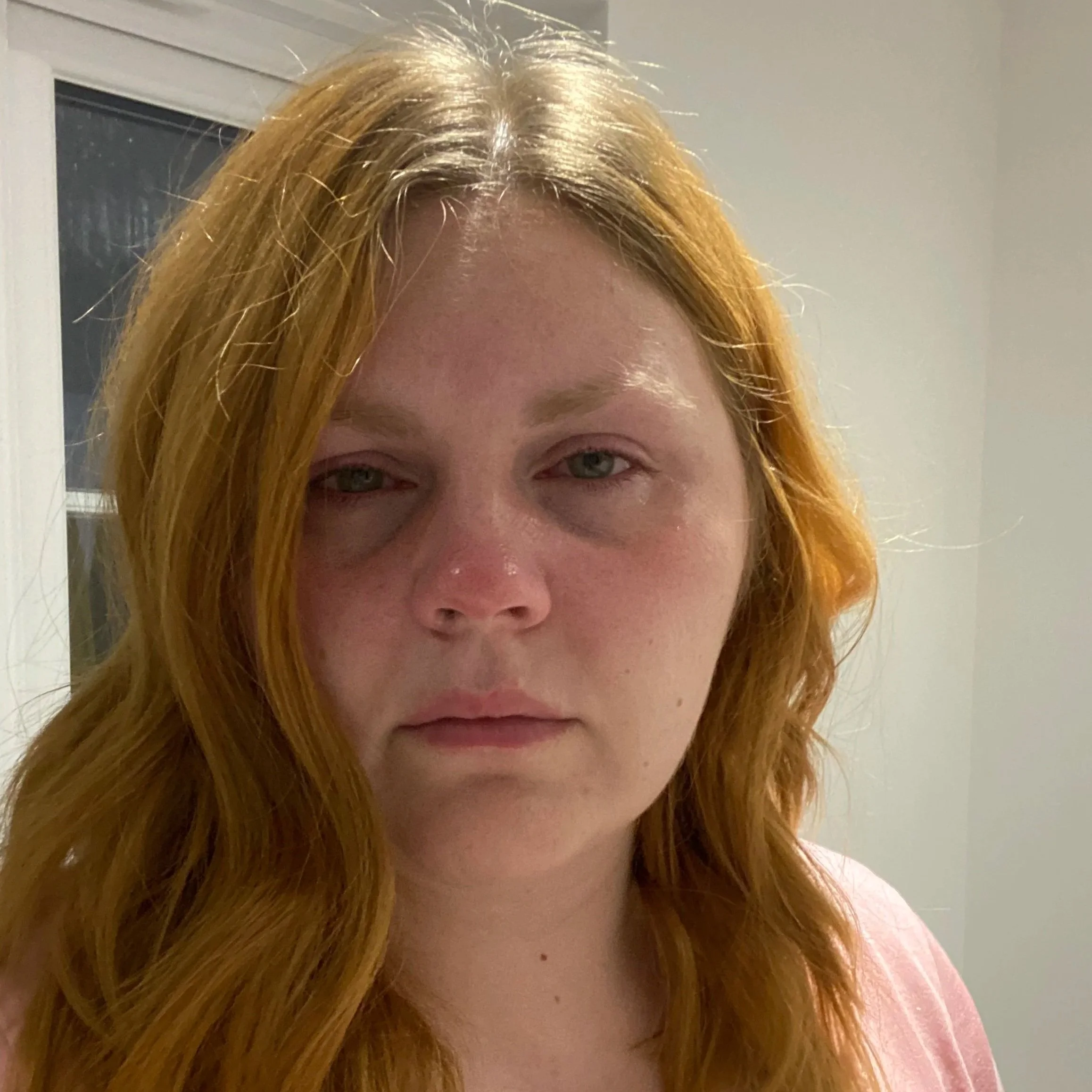
Me during an ‘unexplained’ chronic pain flare, 2021
At the time, I didn't know what it was trying to say. Looking back now, I can see the message was surprisingly simple. Wake up from the lie you are living, honour your queerness, and leave your marriage. You’re a lesbian!!!
Of course, I didn't know that then. All I knew was that my body was in pain.
culture of silence
The reality is that most of us aren't supported to fully express or understand what is happening inside our bodies, and when we do manage to articulate it, we are offered options designed to silence the symptoms so we can get back to pretending to cope.
It seems to be a combination of a lack of curiosity and refusal to trust in lived experiences that is especially harmful.
To simply aim to eliminate the symptom without trusting in its wisdom simultaneously doesn’t feel like effective care to me. It feels like a way to get us to stop talking and keep functioning at the lowest acceptable level.
understanding ourselves
My chronic pain ended with a surprising conclusion but without a diagnosis. No doctor, blood test, or medication led me to the answer.
The symptoms were actually carrying a truth about a part of me that I hadn't yet found a way to articulate. And so for that reason, perhaps it’s wrong of me to expect a doctor to decode the complex signals that the body can give us in regards to our emotional selves.
Regardless, it is hands-down the most clarifying thing that has ever happened to me.
Years of antidepressants, therapy, and being told there was nothing physically wrong with me — and there wasn't, not in the way they were looking.
My body was trying to tell me something that traditional medical tests could ever find. Something that had no name in any consulting room I'd ever sat in. Something I hadn't been given the safety, or the language, or perhaps the permission, to know.
And I think it’s that knowing that so many of us are looking to connect with.
know thyself
I don't think it's an accident that so many women, particularly those who've been dismissed or are exhausted from self-advocacy, find themselves drawn to something more spiritual.
Because we know that we have a knowing.
Whether it’s pulling a tarot card in the morning to check in with your emotional state, tracking the moon cycles with how you manage your energy levels, or carrying crystals like good luck charms – spirituality offers something that mental healthcare seems to deny, The power of knowing thyself.
When you pull a tarot card, you are not facing a member of a healthcare system who is overworked and under-resourced and watching the clock. You are facing a mirror. The card doesn't pathologise the intelligence of your psyche, it offers a perspective steeped in ancient symbology and archetypes without prescribing a set of meanings. You get to find that meaning for yourself.
And there’s a slowness to spiritual practice — a slowness that is often absent from NHS medical appointments. The best spiritual spaces are judgment-free, a chance to quieten the critic in your head for a moment and defer to your higher self instead. And while your higher self can’t diagnose a condition or sign a prescription pad for you, sometimes you don’t need a solution — you need a compassionate witness.
Where a doctor might confirm what’s ‘wrong’ with you, tarot invites you to consider what might be asking for attention.
become an expert in your own experience
The best kind of spirituality validates intuition, and over time, can help you learn that feelings are not symptoms to be managed — but signals worth listening to. There is wisdom here. You don't always need an expert to validate how you feel.
And while there will always be a need for professional medical care, I do think there is much work we can do to rebuild the self-trust that the failing system has stripped us of.
The best forms of spiritual practice teach us to trust ourselves again. They make it a ritual to meet ourselves, to witness our own experience without the critical eye that healthcare so often turns on us. They ask us, again and again, to come back to ourselves.
be careful out there
Big caveat of course, because spirituality is not a replacement for scientifically robust care.
For every compassionate energy worker, every thoughtful astrologer, every tarot reader who has helped someone feel less alone at three in the morning, there is a grifter whose sole purpose is to make you feel deficient so they can sell you an expensive solution to a problem they've manufactured.
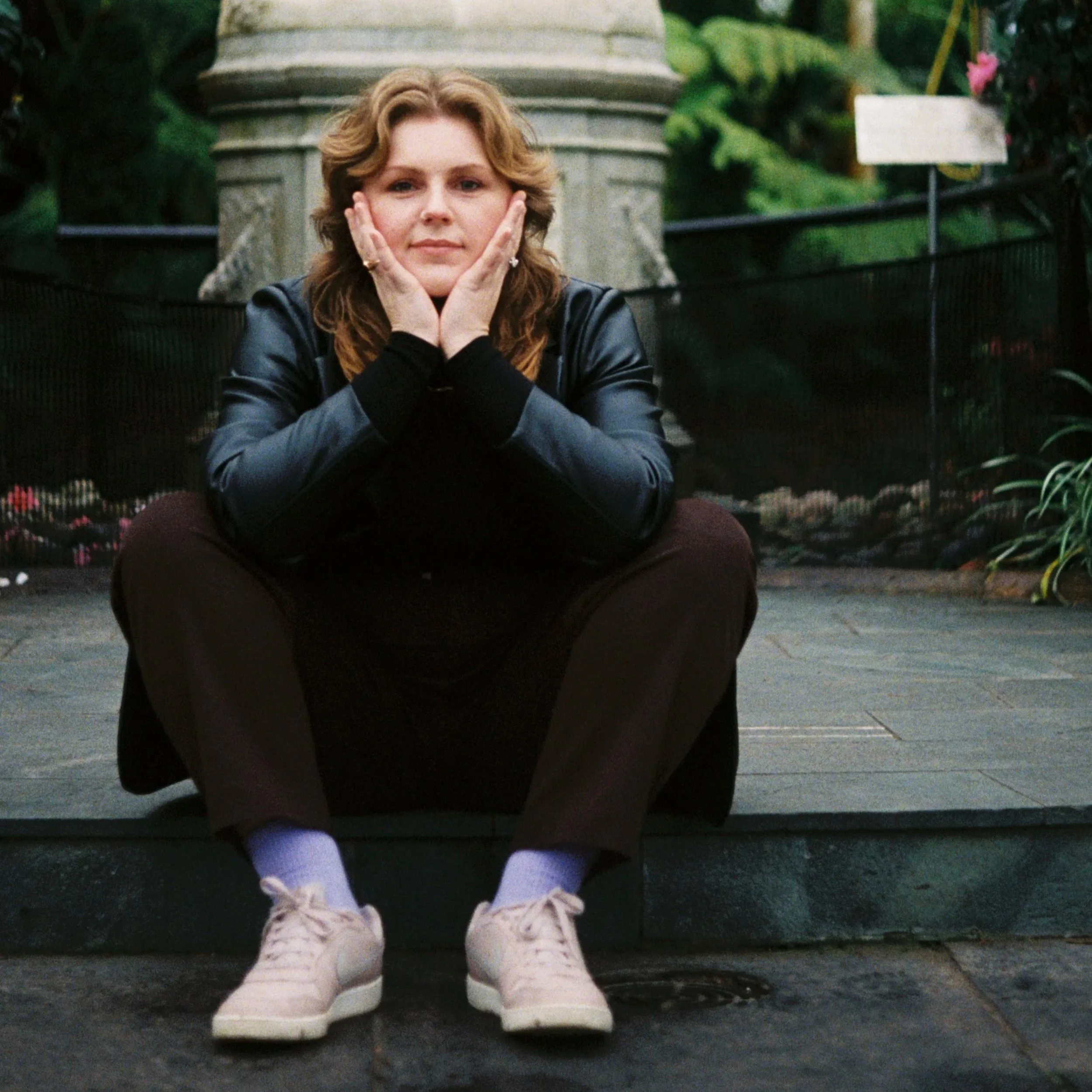
Me being my best gay self, 2025.
Vulnerability is a market, and so is women in pain. People in the wellness industry understands this all too well.
And it’s worth pointing out that some spiritual practices can even worsen symptoms rather than soothe them. Certain forms of intensive meditation can induce or exacerbate psychosis in people with particular histories. An over-reliance on tarot or astrology as a decision-making framework can become a way of avoiding agency, of outsourcing the very self-knowledge these practices are supposed to build.
And sometimes what looks like spiritual community is actually a high-control group with a charismatic leader. But again, practising discernment here is essential which means coming back to ourselves and our own judgement is essential.
The same longing that makes us feel invisible in healthcare is the same longing that can make us vulnerable to spiritual charlatans. That desperate need to be witnessed and understood is still there, and we must be careful who we turn to as a result.
functioning is not healing
There is a distinction I keep returning to, between healing and functioning. Standard mental healthcare, at its most reductive, aims to get us ‘functioning ‘ again — to get us back to productivity, which often is us just coping.
Functioning should not be the end goal.
Surely, that should be the first milestone?
The start of a longer journey?
Being able to ‘get through the day’ is not the same as being fully present in your life. And for many people, what they need is not a shorter waiting list but a fundamentally different relationship with themselves — one that honours every part.
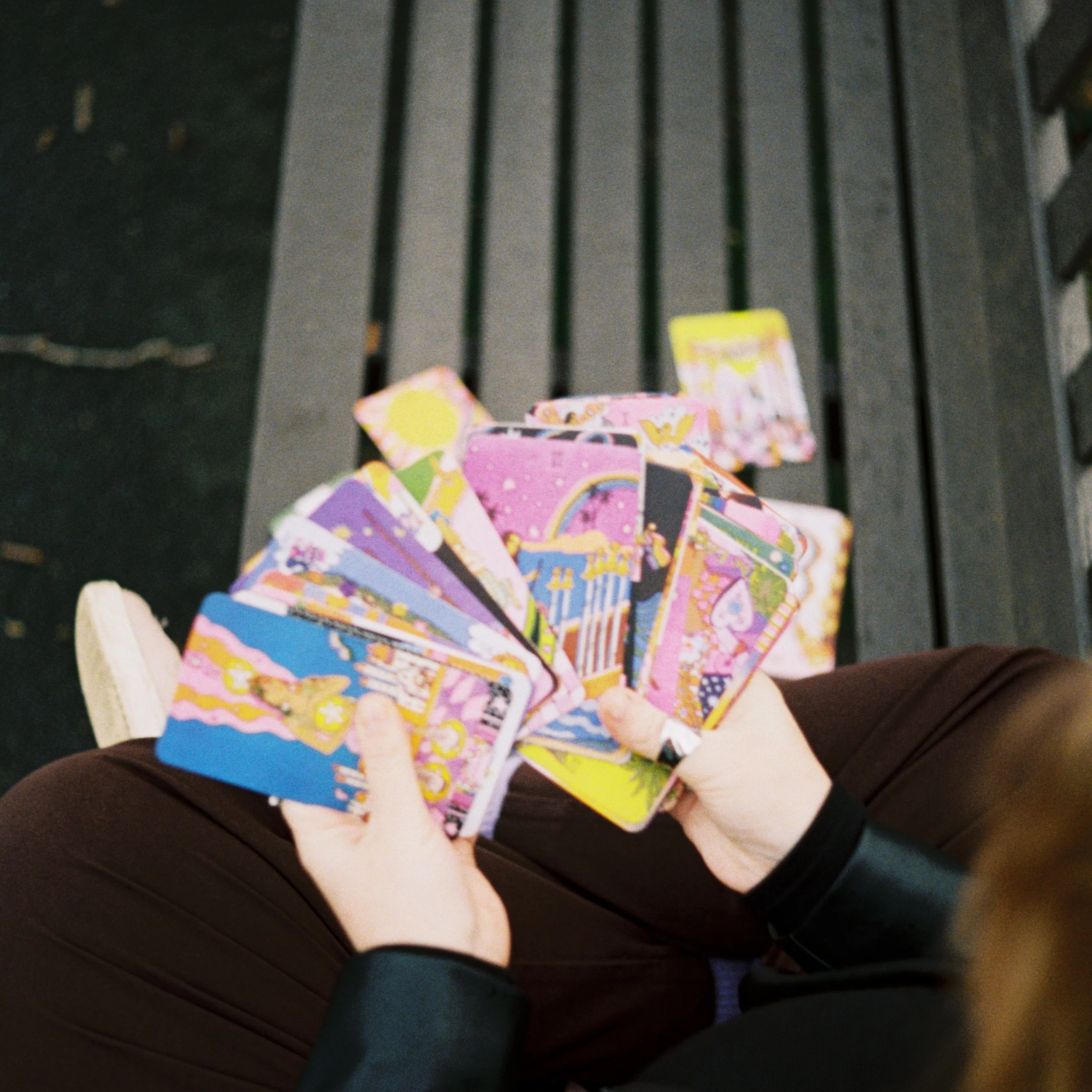
And spirituality can offer a space to explore those parts, the ones that doctors don’t ask about, that aren’t listed in questionnaires. A practice of returning, again and again, to the questions that no one has bothered to ask you and believing that inside yourself there are many answers to hear.
I think about what it means that so many women are turning this way. Not just to tarot and astrology but to herbalism, to somatic therapy, to ancestral healing, to any practice that promises to take the whole of them seriously.
I think it tells us something important. Not about the irrationality of women (which is always the easy conclusion, isn’t it?) but about the state of the world they are trying to survive in.
Modern life is profoundly isolating. Communities are non-existent, the systems meant to support us are overwhelmed, and women, who have historically been the ones to carry the emotional weight of those communities, are increasingly doing so without help or rest.
So, what do we do when we are lonely, exhausted, and no one is listening?
In my experience, we reach for something ethereal. We look for meaning to make sense of our experience. And more often than not, we can only find that internally. No one else can assign meaning to our lives.
I am not healed
I still take my medication. For now, I have made my peace with that.
But I’ve also, as a direct consequence of all that unexplained chronic pain, learned things I couldn't have identified through a traditional medical pathway.
I've learned to observe and understand how a difficult conversation can trigger back pain. How a headache can prevent me from losing myself in a thought spiral. Or how a depressive spell is grief from my childhood days finally coming up to be seen.
Some of that came from reading books or listening to experts in their field. Some of it came from mornings staring out the window in frustration, or pulling a tarot card, or learning to meditate without running away from my own thoughts.
And some of it came from finally understanding why a sexless marriage had felt so desperately, bodily wrong. From realising that the pain wasn't random or mysterious — it was very specific, and it was mine, and it had been trying to get my attention for years.
I am not healed. I'm not sure I even really like that word, which is probably an essay for another day. But I am pleased to say that overall, I’m more at home in myself today that I have ever been.
